
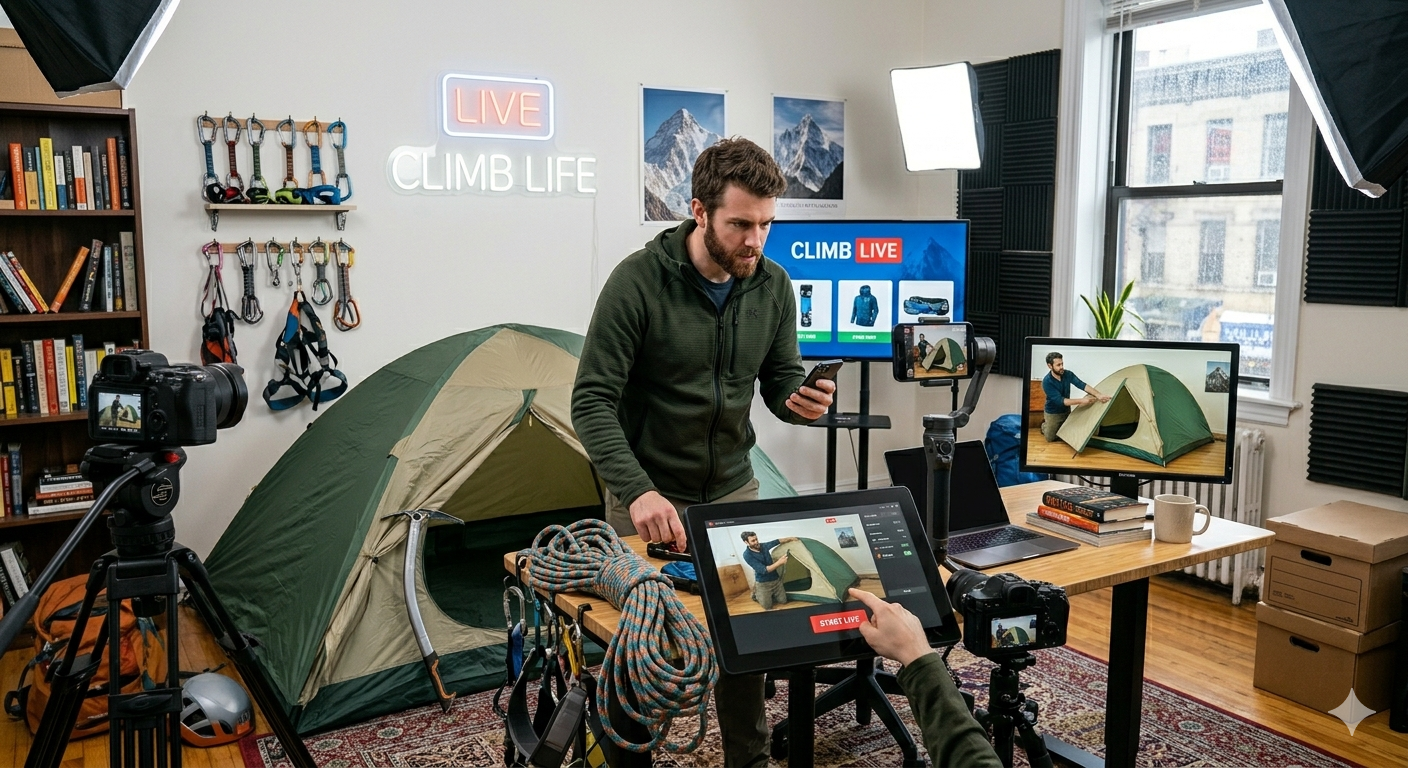
A good seller launch starts before the first buyer arrives
When a new seller launches well on TrailTrade, the room feels credible before the first product pitch lands. That usually has less to do with charisma than people think. Buyers are reading for signs of control. They want to see whether the seller knows their stock, whether the room is organised, whether the inventory lane makes sense, and whether the person on camera looks prepared to show the details that matter.
That is why the strongest first launches rarely feel noisy. They feel clean. The seller has already chosen the right inventory, set the room up properly, thought about the order of the drop, and made it easy for a buyer to understand what kind of stock is coming. Before the live moment creates urgency, the setup creates trust.
On TrailTrade, that trust starts well before the room opens. It begins with the storefront, the upcoming show page, the way the inventory reads, and the clarity of the seller’s public presence.
The stock has to feel coherent, not random
A first launch looks stronger when the inventory feels like it belongs together. That does not mean every item has to match, but it does mean buyers should understand the lane quickly. A room built around premium shell layers, technical packs, or clean camp systems reads better than a desk piled with disconnected odds and ends. Coherence helps buyers decide whether they should stay in the room at all.
That is especially important when a seller is still earning recognition. Established brands can get away with more variation because buyers already trust the source. New sellers do not get that luxury. They need a line-up that explains itself fast.
That is one reason it is worth studying the current seller surface before a first launch. Buyers are comparing not just products, but how clearly each seller presents their lane.
The room has to prove condition, not just announce it
Buyers forgive a lot of things in a first room. They do not forgive vagueness. If a seller says a jacket is clean, the replay or live proof needs to support that. If a pack is lightly used, the camera needs to show the wear points. If a tent is complete, the room should make included parts obvious. The strongest first launches work because the seller understands that trust is visual before it is verbal.
That is where many weak launches fall apart. They talk about quality instead of showing it. They lean on enthusiasm instead of proof. They keep the product too far from the lens, skip the wear zones, or rush the details that actually make a buyer comfortable enough to move.
A strong launch does the opposite. It slows down where proof matters, stays concise where fluff would creep in, and keeps the room product-led from start to finish.
The upcoming page does more work than people think
A good seller launch is not only built in the live room. The pre-live surface matters. When buyers browse upcoming shows, they are deciding whether a room looks worth returning to later. The title, summary, category fit, and cover image all shape that decision. If those signals feel sharp, the seller enters the room with momentum already forming. If they feel generic, the room starts behind.
That is why the better first launches tend to look composed before they ever go live. The seller does not just have products. They have a legible public entry point. Buyers know roughly what they are about to get, why it may be worth their time, and whether the stock lane fits what they care about.
For a first launch, clarity is an advantage. Mystery is usually just friction wearing nicer clothes.
Good launches make buying feel easier, not louder
The strongest first-time sellers are usually not the loudest. They are the ones who make buying feel lower-risk. They answer the practical questions cleanly. They keep the pacing under control. They do not bury important facts under sales chatter. They make it easier for a buyer to understand the item, the condition, the handoff, and the reason the room is worth trusting.
What buyers notice in a strong first launch
- A clear stock lane. The room feels like it belongs to a seller with a point of view, not a random clearance pile.
- Readable condition proof. Wear, defects, included parts, and key details are shown without evasiveness.
- Steady pacing. The seller does not waste time, but they also do not sprint past the proof.
- Calm confidence. The room sounds prepared, not improvised.
- Clean follow-through. The path from room to purchase feels organised, which matters as much as the live energy.
That is also why first launches benefit from a clean seller setup before they ever publish. A stronger onboarding path, sharper profile, and clearer commercial terms all lower doubt before the buyer is asked to act. Getting those fundamentals right matters just as much as going live itself. The path through seller onboarding and even the practical details on commission rates shape how serious the marketplace feels around the seller.
A first launch should make buyers want the second one
The best seller stories are not one-off performances. They feel like the start of a reliable presence. A strong first launch leaves buyers with the sense that this seller will be worth checking again, whether for another live room, a replay, or a future inventory drop. That is a better outcome than squeezing short-term noise out of one busy hour.
For TrailTrade, that matters because the marketplace gets stronger when seller quality compounds over time. A launch that reads well on day one creates a better base for future rooms, future buyers, and stronger public trust in the whole surface.
That is the real shape of a strong first seller launch. It is not flashy for the sake of it. It is controlled, legible, and commercially clean enough that a buyer can say yes without feeling like they are taking a gamble.
Why this matters beyond one room
Seller launches are public signals. They tell buyers what kind of marketplace they are standing in. If the early rooms feel organised, grounded, and proof-led, buyers trust the wider surface more quickly. If they feel vague or chaotic, the marketplace has to work harder to recover that lost confidence later.
That is why good first launches matter beyond the individual seller. They raise the standard of the whole floor. And when that standard rises, everyone benefits, from the careful buyer comparing packs to the next seller deciding whether TrailTrade is worth taking seriously.
FAQ
Common questions
What makes a first seller launch feel strong on TrailTrade?
Clear inventory, readable condition proof, a coherent stock lane, and a room that feels prepared before buyers even join.
Do buyers really judge the seller before the room goes live?
Yes. The upcoming page, seller presence, cover image, and public setup all shape whether the room looks worth returning to.
Is a bigger inventory drop always better for a first launch?
Not necessarily. A tighter, more coherent line-up usually reads better than a larger pile of disconnected stock.
Why does a first launch matter beyond one show?
Because it sets buyer expectations for the seller and also shapes how credible the wider marketplace feels.
Keep reading
Related articles
Field notes
Why Replay Matters More Than the Live Moment in Gear
Replay keeps TrailTrade gear shows working after the live room ends, giving buyers more time to inspect, compare, and buy with confidence.
Read article
Buying guides
How to Judge Used Outdoor Gear Condition Before You Buy Live
Learn how to judge used outdoor gear condition before you buy live, from fabric wear and hardware checks to the red flags that should stop you.
Read article
Live selling tactics
How to Set Up Your First TrailTrade Stream Without Chaos
A practical seller guide to getting your TrailTrade account, lots, pricing, stream structure, and first live room ready without making the setup messy.
Read article