
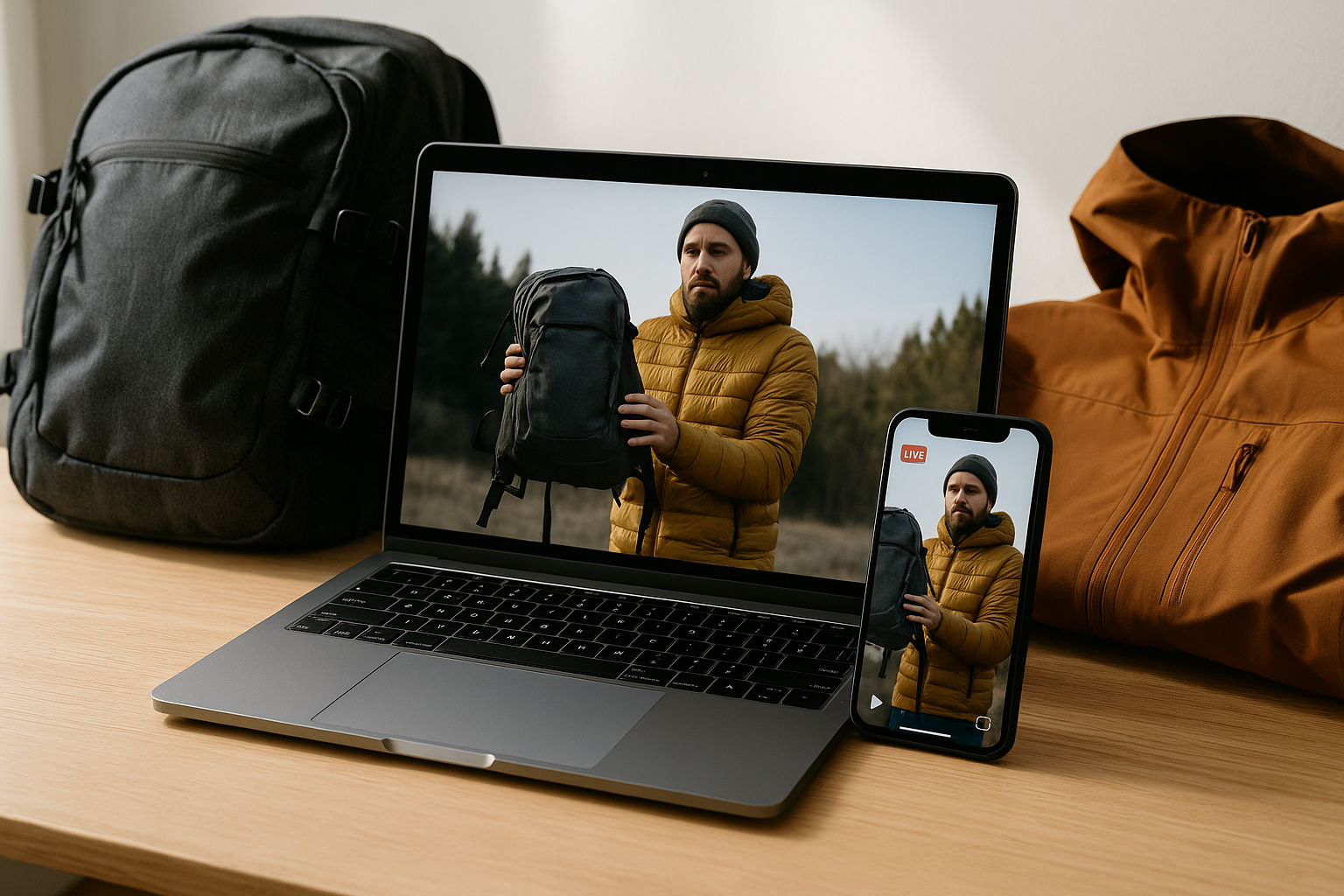
Replay is not the leftovers, it is the second selling window
Too many live commerce teams still treat replay as the faded version of the main event. That logic misses the way premium outdoor gear is actually bought. A live room creates urgency, but replay creates breathing room. On TrailTrade, that matters because buyers are not casually scrolling novelty products. They are judging condition, comparing wear, checking what is included, and deciding whether a real piece of kit deserves their money.
That is why replay deserves more than a quiet archive slot. A strong replay keeps the room working after the live rush ends. It gives the careful buyer a clean path back into the product. It gives the seller a second chance to convert attention they already earned. It also gives the marketplace a deeper discovery surface than a one-hour broadcast that disappears into memory the moment the room closes.
If the live show is the spark, replay is the part that keeps heat in the sale.
Outdoor gear benefits from a second look
Replay matters more in outdoor gear than in many other categories because inspection is not optional. A buyer looking at a premium shell, a technical backpack, a tent, or a climbing pack usually wants another pass before committing. They want to pause on the fabric. They want to rewatch the zip demo. They want to look again at cuff wear, seam condition, buckles, soles, frame shape, included parts, and the way the seller handled the item under real light.
Static listings rarely carry that load well. A handful of polished photos can show the shape of a product, but they often fail when the buyer needs proof. Replay sits between live urgency and static listing convenience. It holds onto the richer evidence of the live moment while letting the buyer review it on their own time.
That makes replay especially valuable for anyone browsing TrailTrade categories with a more technical buying lens. The better the item, the more likely the buyer wants that second pass.
Replay helps sellers convert the buyers who do not act live
Not every serious buyer shows up at the exact minute a room goes live. Some are working. Some are in another timezone. Some only hear about the drop later. Some watch the room live but still need ten more minutes of distance before making the call. Treating those people as lost traffic is lazy and expensive.
A replay turns missed timing into recoverable intent. It gives the seller another route to convert the same show without restaging the whole thing. It also helps sellers with smaller audiences punch above their live concurrency. If a room is clear, product-led, and well structured, replay lets that room keep doing useful work long after the first wave of viewers leaves.
That is especially important for sellers building trust through their storefront and public shows. Buyers often move from the live and replay surface into a seller check, a category browse, or a return visit later in the day. Replay keeps that journey alive instead of forcing every conversion into one frantic live window.
A good replay is built before the room starts
Replay quality is not something you sprinkle on afterwards. It is built into the show itself. Sellers who want replay to convert need cleaner structure from the opening minute. That means naming the item clearly, showing condition without rambling, confirming what is included, repeating the important facts at the right moments, and keeping the room readable for someone who was not there in real time.
What helps a replay hold up
- Clear openings. Say what the item is, what category it sits in, and why it matters before the room drifts.
- Visible proof. Bring the camera close enough to show wear, defects, closures, interiors, and key materials.
- Useful repetition. Repeat the core condition points and what is included so a replay viewer does not have to guess.
- Clean pacing. Dead air, side chatter, and confusing lot transitions feel worse on replay than they do live.
- Direct closes. End each segment with clarity so the replay viewer understands whether the item sold, passed, or is still the focus.
If sellers want stronger rooms, they should think about replay before they ever hit the button on the next show in upcoming shows. A replay-friendly room is usually a better live room anyway.
Replay also gives TrailTrade a stronger discovery surface
Replay is not only a seller tool. It is a marketplace surface. It gives TrailTrade more ways to surface quality stock, useful demonstrations, and seller trust signals after the live slot ends. That matters because buyers do not always enter through the same door. Some come in through category browsing. Some arrive through a seller page. Some come back to compare after seeing another room. Some simply want proof before they commit.
Replay gives those buyers a better route than a dead room or a cold listing. It keeps product context alive. It helps buyers learn how a seller presents gear. It creates more indexable, reusable commerce than a room that only matters for one hour and then vanishes.
For sellers, that means better return on every strong live show. For buyers, it means less pressure to buy blind. For the platform, it means more commercial value from the same inventory and the same effort.
Live still matters, but replay is where trust gets finished
None of this makes live less important. Live is still where urgency, interaction, and momentum peak. It is still where the seller can answer questions in real time and where a room feels most alive. But the best TrailTrade shows should not collapse the moment the broadcast ends.
For premium outdoor gear, trust is often finished on the second look. That is why replay deserves a bigger role than an afterthought. It is not the weak version of live. It is the bridge between live proof and a confident decision.
When sellers build rooms that hold up on replay, buyers get a better buying path and the marketplace gets a longer commercial shelf life from every quality show. That is not extra polish. It is the work.
Where to look next
If you want to see how that plays out across the wider marketplace, browse current sellers, compare active and upcoming rooms on the shows surface, and use the public journal as part of the buying path rather than a detached content island. The strongest TrailTrade articles should help buyers judge better and help sellers sell better. Replay sits right in the middle of that job.
FAQ
Common questions
Why does replay matter so much for used outdoor gear?
Because buyers often need another pass to judge wear, included parts, and real condition before they commit.
Should replay replace the live moment?
No. Live still creates urgency and interaction, but replay extends the selling window and helps trust land properly.
What makes a TrailTrade room replay-friendly?
Clear product naming, visible condition proof, clean pacing, repeated key facts, and direct closes that make the room understandable to someone watching later.
Should sellers build shows differently if replay matters?
Yes. A replay-friendly room is usually more structured, more legible, and more commercially useful than a room built only for live chatter.
Keep reading
Related articles
Seller stories
What a Strong First Seller Launch Looks Like on TrailTrade
A strong first seller launch earns trust before the room goes live with cleaner inventory, clearer proof, and a better buying path.
Read article
Buying guides
How to Judge Used Outdoor Gear Condition Before You Buy Live
Learn how to judge used outdoor gear condition before you buy live, from fabric wear and hardware checks to the red flags that should stop you.
Read article
Live selling tactics
How to Set Up Your First TrailTrade Stream Without Chaos
A practical seller guide to getting your TrailTrade account, lots, pricing, stream structure, and first live room ready without making the setup messy.
Read article